

When a homeowner needs help, they don’t flip through business cards or search the yellow pages. They pull out their phone and search “roof repair near me” or “kitchen remodeler in [city].” Local Contractor SEO decides whether you show up in that moment.
This isn’t just about “ranking on Google.” It’s about showing up in the places that actually drive calls, think Maps, the local pack, and the organic results, with a clear message for the areas you serve.
In this guide, you’ll learn how local search works for contractors, how to nail the essentials (Google Business Profile, service pages, reviews), and which tactics help you stand out from every other “contractor near me”, plus a simple action plan you can start this month. And if you’d rather have an experienced partner build and manage this for you, our contractor marketing agency can help implement the strategy end to end.
What Is Contractor SEO (and Why Local Matters)?
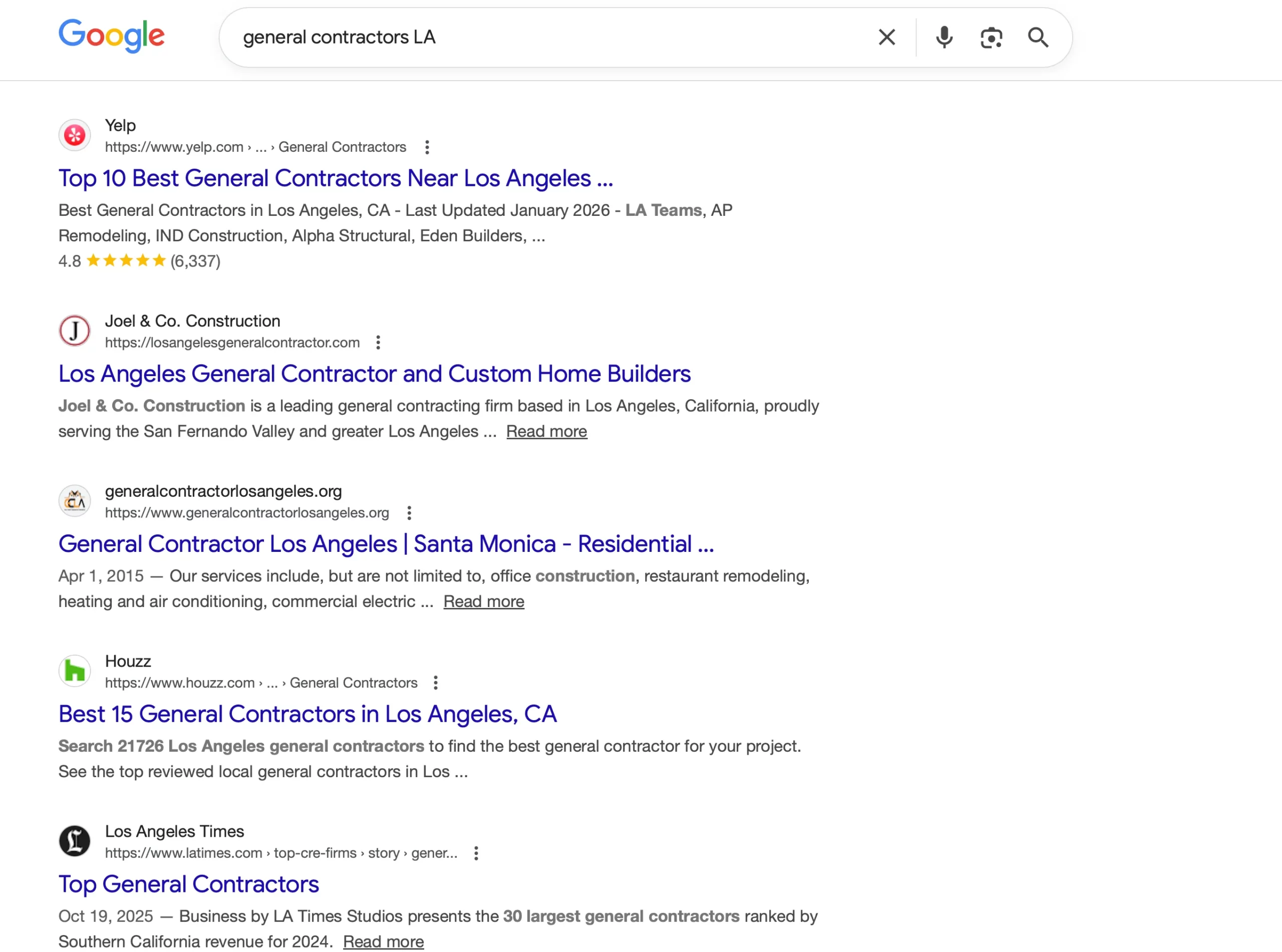
Contractor SEO is just making sure your business shows up when someone in your area is actually looking for what you do, like “roof leak repair [city]” or “concrete driveway contractor near me.” Because you can only take jobs within a certain radius, local SEO is about being visible to the right homeowners in the places you actually serve.
How Local Search Works for Contractors
When someone searches “bathroom remodeler near me,” Google is basically trying to answer three questions:
- Relevance – Are you a match for what they want? If your Google Business Profile and website clearly talk about the exact services you offer, you’re more likely to show up.
- Distance – Can you realistically take the job? Google leans toward businesses close to the searcher, and it also looks at the service areas you’ve set.
- Prominence – Do you look legit and trusted? This is where reviews, consistent business info online, local mentions, and people searching your business name start to matter.
From there, you’ll usually show up in a few spots: the map results (local pack), the regular listings underneath, and sometimes the quick Q&A boxes if you’re answering common questions clearly.
There’s no single hack that makes Contractor SEO work overnight. Google is looking at all of these signals together, your Google Business Profile, your website content, your reviews, your location, and how consistently everything lines up.
The goal isn’t to trick the algorithm. It’s to make it very obvious to Google (and to real people) who you are, what you do, and where you work.
Your Google Business Profile: The Foundation of Local Contractor SEO
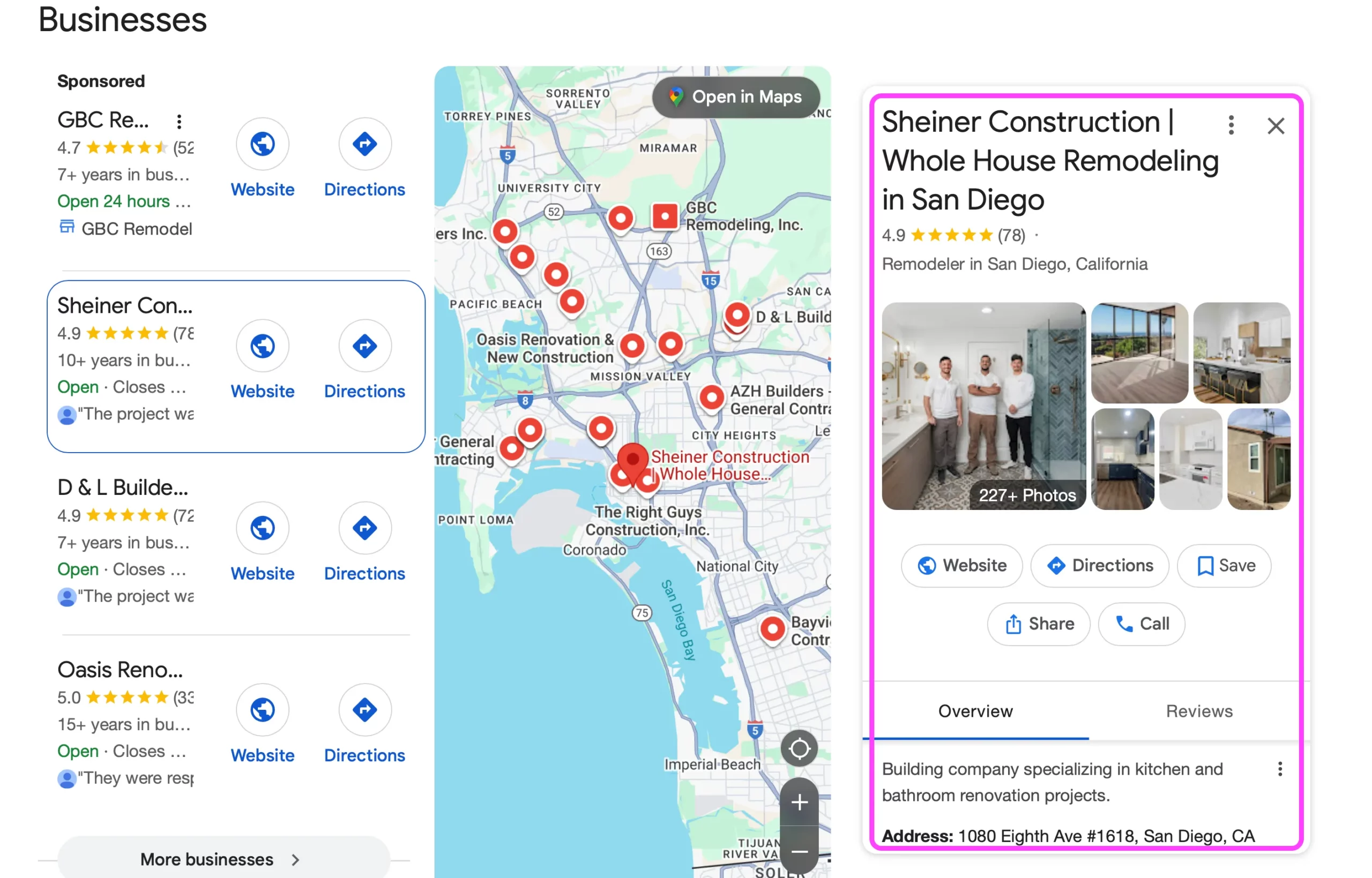
If you do any kind of local work, your Google Business Profile (GBP) is one of the biggest Contractor SEO levers you have. It’s what powers the map pack, tap-to-call buttons, directions, and “open now” results.
Here’s how to set it up so Google (and your customers) actually trust it.
1. Nail the fundamentals: NAP, categories, and service areas
Start with clean basics:
- NAP (Name, Address, Phone) must match your website and other listings. Little inconsistencies (Ste vs Suite, old numbers, outdated addresses) can quietly hurt local Contractor SEO.
- Primary category should match what you most want to be found for: General Contractor, Roofing Contractor, HVAC Contractor, Concrete Contractor, etc.
- Secondary categories can reflect other core services, use them, but don’t spam everything.
- Service areas should be cities and neighborhoods you actually serve, not an endless radius.
Your business description should read like a clear one-liner pitch: who you are, what you do, and where you work, with natural mentions of key services and locations.
2. Show real work: photos, videos, and services
GBP isn’t just a line of text, it’s your visual proof. Add:
- Real jobsite photos (bonus if you have before/after)
- Team shots and branded vehicles
- Short walkthrough videos of projects
Then, in the Services section, list your main offers clearly (roof repair, kitchen remodeling, concrete driveways, etc.). This gives Google more context and helps homeowners quickly see if you’re the right fit.
3. Make reviews part of your process
Reviews are one of the strongest ranking and conversion signals for local Contractor SEO. We’ll talk more about this below.
4. Keep it alive, not dusty
Google favors profiles that look active and accurate. On a regular basis:
- Post project updates, promos, or quick FAQs
- Update hours, holiday schedules, and contact info
- Add new photos when you finish a great-looking job
A well-maintained Google Business Profile anchors your entire local Contractor SEO strategy and makes it much easier for the right local customers to find and trust you.
Building a Local SEO-Ready Contractor Website

Your Google Business Profile helps you get found, but your website is what convinces someone to actually contact you. For Contractor SEO, the goal isn’t just to look decent, it’s to make it obvious who you help, where you work, and why you’re the right choice in that area.
Here’s where most contractor sites miss, and how to fix it.
A. Make Your Service Area Obvious
One of the fastest wins in local Contractor SEO is spelling out where you work. On your homepage, above the fold, people should see:
- Your main city (e.g., “Serving homeowners in Phoenix”)
- A short list of key surrounding areas
- A clear link to an Areas We Serve page
That page can list your primary cities (grouped by region or county if helpful) and link to any city/location pages you create. It helps Google understand your footprint and reassures humans that you actually come to their neighborhood.
If someone has to hunt to see if you service their area, they’ll move on.
B. Service Pages That Match Real Searches
For strong Contractor SEO, one generic Services page isn’t enough. Google ranks pages, so each core service deserves its own:
- Kitchen Remodeling
- Bathroom Remodeling
- Concrete Driveways & Patios
- Roof Repair
- Exterior Painting
- Basement Finishing
On each service page, cover:
- What you do – scope, typical projects, timelines
- Who it’s for – homeowners, investors, commercial, etc.
- Where you do it – natural mentions of your city/area
- Proof – before/after photos, short project blurbs, reviews
- Next step – a clear call-to-action (call, request a quote, schedule an estimate)
When your pages line up with real searches like “bathroom remodeler in [city],” you attract better local leads instead of generic traffic.
C. Location / City Pages for Expansion
If you truly work in multiple cities, this is where city pages come in:
- “Kitchen Remodeling in Scottsdale”
- “Concrete Contractor in Mesa”
To make these pages pull their weight:
- Reference local neighborhoods or landmarks
- Mention the types of projects you’ve done there
- Use real photos from that area when possible
- Tie back to your process and service standards
Keep them unique and specific. Thin, copy-pasted pages with only the city swapped won’t help your Contractor SEO for long.
D. On-Page SEO Basics
You don’t have to be an SEO expert to get the essentials right. Focus on:
- H1 & title tags using local phrasing:
- Kitchen Remodeling Contractor in [City]
- Concrete Driveway Contractor Serving [City] & Nearby Areas
- Meta descriptions that clearly state what you do and where
- Internal links between:
- Homepage → service pages
- Service pages → related services and city pages
- Fast, mobile-friendly design with:
- Click-to-call buttons
- Simple forms
- Clean, uncluttered layouts
When your site is built this way, Contractor SEO stops feeling like guesswork. Google understands what you do and where you do it, and homeowners can decide to call you in a matter of seconds.
Reviews, Reputation, and Trust Signals
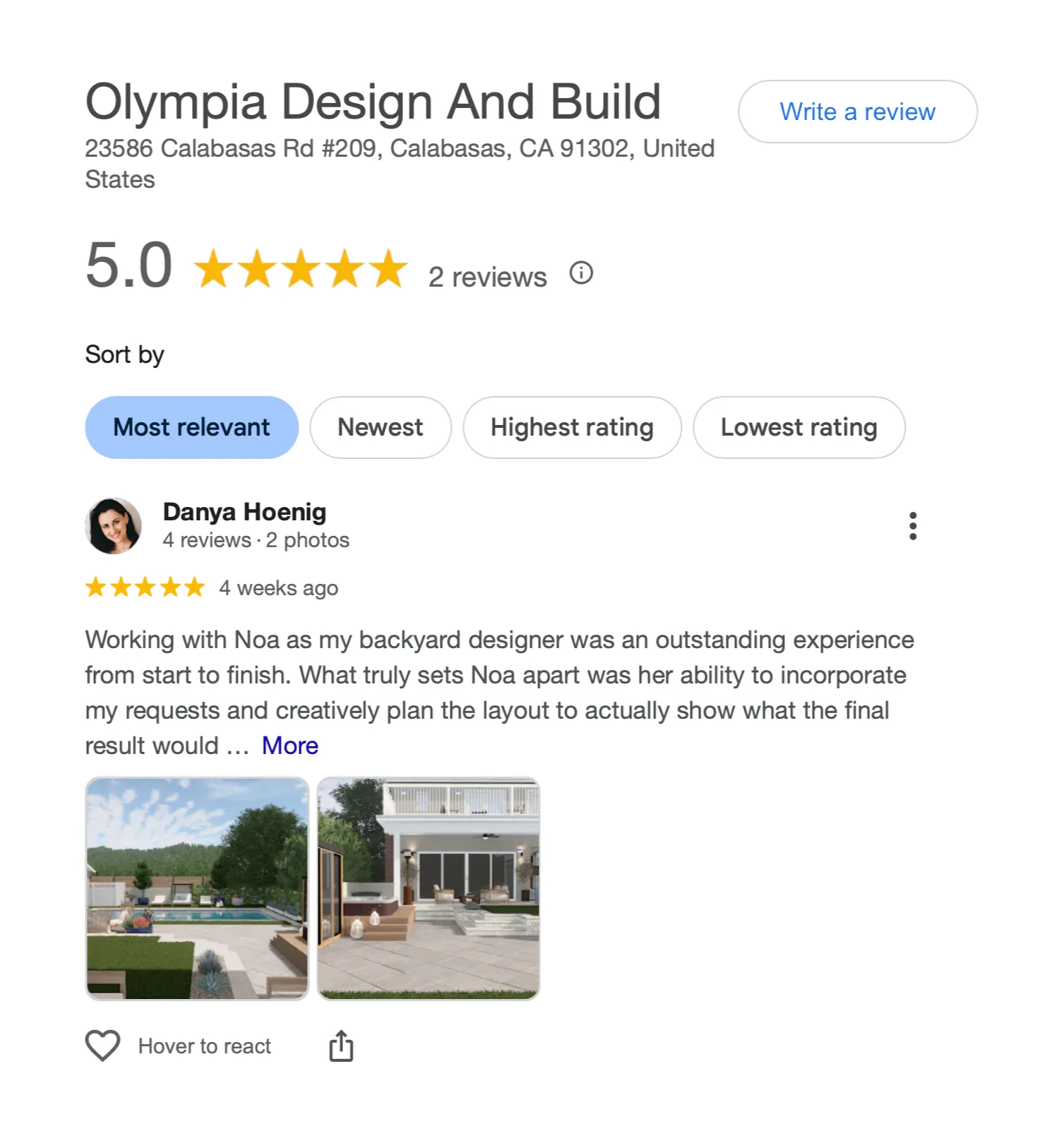
We already talked about reviews as a ranking factor in your Google Business Profile section, but they’re just as important for what happens after you show up. If Contractor SEO is about visibility, reviews are about being chosen. Homeowners don’t just want any contractor, they want proof you’ve done good work for people like them, in places like theirs.
According to BrightLocal’s Local Consumer Review Survey 2025, only 4% of consumers say they never read online reviews for local businesses. Everyone else is checking your reputation before they call.
Where your reviews should live
Your main review hub should still be:
- Google Business Profile – priority #1 for both rankings and conversions.
From there, it can help to have a supporting cast on:
- Yelp
- Houzz / Angi (if they fit your niche)
You don’t need to be everywhere, but a healthy spread reinforces your reputation across the web and supports your overall Contractor SEO footprint.
A simple review workflow
Keep it light and repeatable:
- Ask every happy client right after the job.
- Send a direct link to your GBP review page via text or email.
- Follow up once a few days later with a quick reminder.
If they naturally mention the service + city (e.g., “new driveway in [City]”), even better. That kind of language quietly strengthens your local relevance.
Bring those trust signals onto your website
Don’t leave social proof stranded on Google:
- Add a short testimonial strip to your homepage and key service pages.
- Embed a few standout GBP reviews.
- Pair before/after photos with a one-line quote from the client.
Then layer in other credibility markers:
- Licenses, insurance, and certifications
- Association badges and local memberships
- “In business since [year]” and any awards or media features
All together, these signals support your Contractor SEO and reassure homeowners they’re not just finding you online, they’re safe to hire you offline.
Content That Attracts the Right Local Jobs

If local search is how people find you, your content is what convinces them you’re the right fit. In Contractor SEO, content is about publishing the right pieces that attract the right kind of jobs in the right areas.
Show your work: project-focused content
One of the most underrated content types for Contractor SEO is the project spotlight. Instead of a generic “We remodel kitchens,” write something like:
- “Modern Kitchen Remodel in [Neighborhood, City]”
- “Stamped Concrete Patio for a Family in [City]”
- “Full Roof Replacement After Storm Damage in [Area]”
Each piece can include:
- Before/after photos
- What the client needed
- The materials or approach you used
- The city or neighborhood
- A light call-to-action to get a similar project started
These posts quietly stack local relevance, show real work, and give prospects confidence you’ve solved problems like theirs.
Make your process feel safe and predictable
Homeowners aren’t just buying the final result, they’re buying the process. Pages like:
- “Our 5-Step Roof Replacement Process”
- “What to Expect During a Kitchen Remodel”
help remove anxiety. They also support Contractor SEO by naturally including service keywords, location references, and internal links back to your main service pages.
Answer the questions people actually Google
FAQ-style content does double-duty: it builds trust and captures long-tail searches. Examples:
- “How Long Does a Bathroom Remodel Take in [City]?”
- “Do I Need a Permit for a Deck in [City]?”
- “How to Choose a Concrete Contractor in [City]”
These topics match the way real people search and give you more opportunities to show up before they’ve picked a contractor.
How all this supports Contractor SEO
Done right, this kind of content:
- Targets long-tail, high-intent keywords your competitors ignore
- Links naturally to your core service and city pages
- Shows proof of work and expertise before someone ever calls
- Builds a stronger overall topical footprint around your trade + location
When you think of content as a way to document real jobs, answer real questions, and walk people through real processes, Contractor SEO becomes less about “blogging” and more about showing up as the obvious, trustworthy choice in your service area.
Local Links, Citations, and Directories
For local Contractor SEO, you don’t need hundreds of backlinks. You need clear, consistent signals that you’re a real, established business in the area you serve.
Think of links and citations as proof points:
“This contractor is legit, local, and active.”
Here’s a simple way to cover your bases:
1. Lock in your core local citations
Make sure your business is listed (correctly) on:
- Google Business Profile
- Apple Maps, Bing Places
- Yelp and other major map/directories
- Local chamber of commerce or city business listings
Checklist:
- Same Name, Address, Phone (NAP) everywhere
- Same website URL
- Update old listings if you’ve moved or changed numbers
2. Add industry + partner listings
Pick a few platforms your ideal customers actually use:
- Houzz
- Angi
- HomeAdvisor / Thumbtack (if they fit your strategy)
Then look for “real world” partners who could link to you:
- Suppliers (tile shops, kitchen showrooms, roofing suppliers)
- Designers, realtors, or trades you collaborate with
One simple ask: “Can you list us as a preferred contractor and link to our site?”
3. Layer in local sponsorships
Easy, high-trust local signals:
- Youth sports teams
- Neighborhood associations or events
- Local trade groups and charities
You don’t need an aggressive link-building campaign. For Contractor SEO, a handful of accurate citations + a few real local links is enough to build a believable footprint that both people and search engines trust.
Tracking What’s Working (So You’re Not Guessing)
If showing up in search is the goal, tracking is how you tell whether your Contractor SEO is actually doing its job. Without data, you’re basically doing hope-based contractor marketing: publishing pages, waiting, and crossing your fingers that the phone will ring.
The numbers that actually matter
For local contractors, you don’t need a 40-page report. You need a short list of metrics that tie directly to real jobs:
- Organic traffic – Are more people finding your site from Google over time?
- Calls from organic + Google Business Profile – How many phone calls are coming from non-paid sources?
- Form submissions – How many quote requests or contact forms are coming from organic visitors?
- Leads by city and service – Which locations and services are generating the most interest?
- Jobs booked and job value – Of those leads, how many turn into jobs, and what are they worth?
These numbers tell you whether your Contractor SEO is bringing in the right kind of attention.
Simple tools to give you clarity
You don’t need an enterprise setup to start:
- Google Analytics / GA4 – Shows you overall traffic, top pages, and where visitors come from.
- Google Search Console – Shows which keywords you’re appearing for, which pages get clicks, and where you’re improving or slipping.
- Call tracking tools (like CallRail) – Connect phone calls back to specific pages or traffic sources, so you know which Contractor SEO efforts are turning into conversations.
Turn data into better decisions
Once you have this visibility, you can start making smarter moves If:
- A service page gets traffic but few calls, improve the content and calls-to-action.
- Certain services drive higher job value, prioritize those in your content, internal links, and on-page SEO.
- A city page brings in strong leads, create more content and project spotlights in that area.
Contractor SEO works best when it’s a loop: improve → measure → adjust → improve again. Tracking doesn’t just show you what happened, it tells you exactly where to push harder next.
Action Plan: How to Start Improving Local Contractor SEO This Month
You don’t need a full overhaul to see results from Contractor SEO, just a few focused moves that send clearer signals to Google and your ideal clients.
1. Claim and optimize your Google Business Profile
Make sure your name, address, phone, hours, and website are correct. Choose the right primary category and add a short description that mentions what you do and where you work.
2. Clean up your Areas We Serve
Add an “Areas We Serve” section to your homepage with your main city plus key surrounding areas. Keep this consistent with your GBP, local clarity is a big Contractor SEO win.
3. Fix your top 3–5 core service pages
Give each main service its own page (kitchen remodeling, roof repair, concrete driveways, etc.) with what you do, who it’s for, where you work, and a clear call-to-action.
4. Set up basic tracking
Turn on GA4 and set up simple goals (form submissions, click-to-call). If you can, add call tracking so you know which pages and traffic sources actually drive calls.
5. Start a simple review system
After every job, send a short text or email with a direct review link and one polite reminder.
You don’t have to fix everything at once. Contractor SEO compounds, small, consistent improvements beat one giant project you never finish.
For more tips on contractor marketing, feel free to read our blog here.
A Quick Note on AI, SEO, and AIEO
Search is changing. Homeowners are starting to see AI-generated summaries, answer boxes, and “quick takeaways” before they ever click a website. That doesn’t kill Contractor SEO, but it does raise the bar on how clear and useful your content needs to be.
You’ll sometimes hear this called AIEO (Answer / AI Engine Optimization). Basically, making your content easy for both humans and AI systems to understand and trust. For contractors, that simply means:
- Answer real questions directly – Add clear FAQs and sections that speak to things people actually ask: timelines, permits, costs, what to expect in your city or area.
- Be specific – “Quality service” and “we care” don’t help AI or people. Detailed explanations, real project examples, and location mentions support both Contractor SEO and AIEO.
- Strengthen your trust signals – Consistent business info, reviews, licenses, and local mentions help search engines and AI tools see you as a real, established contractor.
You don’t need a separate AI SEO strategy. If your site already explains what you do, where you work, and answers the questions your ideal clients are asking, you’re naturally future-proofing your Contractor SEO for both search and AI-driven results.
Contractor SEO FAQs
1. What is SEO for contractors?
SEO for contractors is simply getting your business to show up when people in your area search things like roof repair near me or kitchen remodeler in [city]. It means optimizing your website, Google Business Profile, content, and reviews so the right local homeowners find you first.
2. What is SEO marketing for contractors?
SEO marketing for contractors is using Google search as a steady lead source, not just a one-off tactic. You’re building assets (service pages, location pages, reviews, helpful content) that keep bringing in traffic and calls over time, instead of only paying for every click.
3. How can SEO help your contractor business?
Done well, local contractor SEO brings in more of the jobs you actually want: local, higher-intent, and ready to book. It helps you rely less on who happens to refer you and more on people who already trust you after reading your reviews and website.
4. Do small contractors really benefit from SEO?
Yes, sometimes even more than big players. If you only serve a few cities or neighborhoods, strong local SEO can make you the contractor people see everywhere in that area. You don’t need thousands of visitors, you just need the right few dozen each month.
5. What is the best SEO practice for contractors?
If you only do one thing: make it clear what you do and where you do it. That means specific services (“roof repair,” “concrete driveways,” “kitchen remodeling”) + specific locations (“in [city] and nearby areas”) on both your website and Google Business Profile, backed by real photos and reviews.
6. How long does SEO take for contractors?
Most contractors see early movement in 3–6 months and stronger results within 6–12 months, depending on competition and effort. Contractor SEO builds on itself, the more reviews, content, and authority you stack, the easier it is to rank for more searches.
7. How much does contractor SEO cost?
Budgets vary by market and goals, but many contractors invest anywhere from a few hundred to a few thousand dollars per month. The real question is ROI: if SEO is consistently bringing in profitable jobs, it’s a growth investment, not just another bill.
8. Is local SEO better than Google Ads for contractors?
They play different roles. Google Ads can get you calls this week; local contractor SEO takes longer but usually delivers cheaper, more stable leads over time. The strongest contractors usually use both: ads for speed, SEO for long-term momentum.
9. Should you hire contractor SEO services or DIY?
You can absolutely DIY the basics, optimize your Google Business Profile, clean up your site, and ask for reviews. But if you’re already stretched running crews and jobs, working with a team that specializes in contractor SEO can shortcut a lot of trial and error.
10. What is the importance of SEO for contractors today?
Most homeowners Google first and ask friends later. If you’re not showing up when they search, you’re not even in the running. Contractor SEO makes sure you’re visible, credible, and easy to contact at the exact moment they’re ready to spend.
Turn Local Searches into Real Jobs
At the end of the day, Local Contractor SEO isn’t about gaming an algorithm. It’s about clarity, trust, and showing up where the best jobs begin. Right when someone in your area types “contractor near me” and actually needs help.
Take a fresh look at your online presence and ask yourself:
If a homeowner in your service area lands on your Google Business Profile or website, can they tell what you do, where you work, and why they should trust you in 10 seconds? If the answer is “not really,” that’s the gap your competitors are walking through.
Contractor SEO works best when it’s not just a few keywords, but a full system:
- A Google Business Profile that’s dialed in
- A website built around your services and service areas
- Reviews and content that build real trust
- Tracking that shows what’s actually driving leads
That’s the kind of system we build at Just Digital. If you want help turning local searches into steady, qualified jobs, let’s talk about your Contractor SEO and what’s possible in your market.
👉 Ready to tighten things up? Schedule a call with us and we’ll walk through where you are now.

Written by Hugo Fernandez黄瓜视频官网
CEO, Founder
Hugo Fernandez is the CEO and founder of Just Digital Inc., a Los Angeles-based digital marketing agency he launched in 2012. With over a decade of experience helping businesses grow through strategic marketing, Hugo is also the author of The Client Acquisition Blueprint, a practical guide to building an online presence that generates consistent leads. His proven, results-driven tactics have helped clients across industries grow their businesses exponentially.
With Just Digital,
Success is Easy-Peasy Lemon-Squeezy.
When life gives us lemons, we generate results. Contact us today and we can start making lemonade.