
The plastic surgery market isn’t short on options. For patients, that’s the whole problem.
Before booking a consultation, most people spend weeks researching, comparing surgeons, reading reviews, watching procedure videos, revisiting websites multiple times before finally reaching out. By the time someone contacts your practice, they’ve already formed a strong opinion about you. The question is whether that opinion is strong enough to make them choose you.
That’s what modern plastic surgery marketing strategies actually come down to. Not just generating attention, but building enough familiarity and trust across enough touchpoints that when a patient is ready to book, your practice is the obvious choice.
Practices seeing the strongest long-term growth usually treat marketing as a connected system rather than isolated tactics. That’s exactly the approach our Total Marketing Package was built around
This guide covers what’s working now, and why.
Why Plastic Surgery Marketing Has Changed
The Modern Patient Journey Is No Longer Linear
One of the biggest reasons plastic surgery marketing strategies have changed is because patient behavior has changed. People no longer see a single advertisement and immediately book a consultation. The decision-making process is much longer, more research-driven, and far more influenced by digital content than it was even a few years ago.
Today’s patients move through multiple stages before they ever contact a practice. They may start by searching Google for information about a procedure, then spend time reading reviews, comparing surgeons, watching videos, browsing Instagram or TikTok, checking before-and-after results, and revisiting websites several times before making a decision.
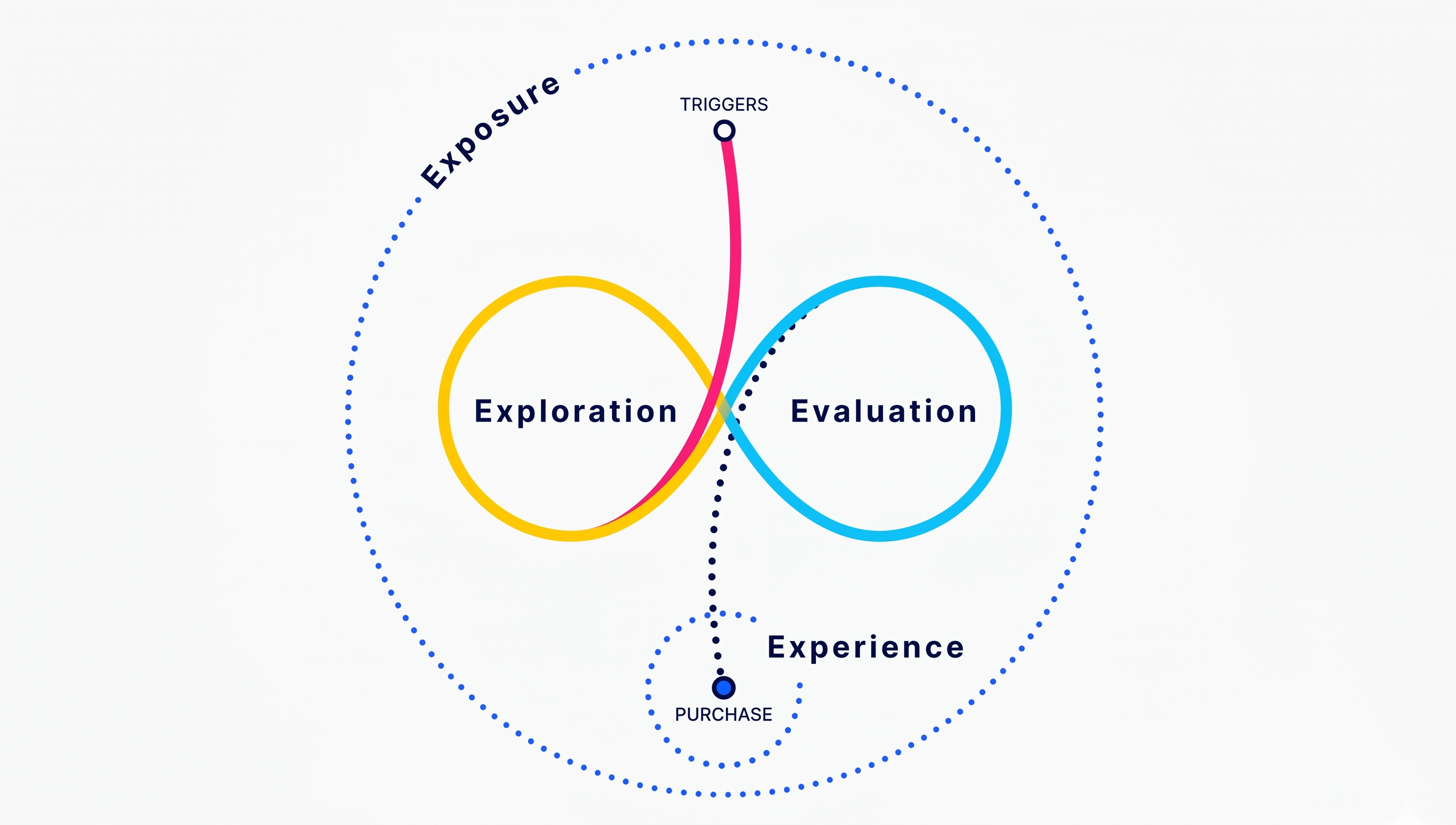
This behavior is often referred to as the “messy middle” of marketing. Patients move back and forth between researching, comparing, evaluating, and reconsidering before they finally feel ready to book. A person may discover your practice on social media, leave your website, read competitor reviews, return a week later, watch a video about recovery expectations, and only then decide to reach out.
Because of this, repeated visibility matters more than ever. Practices that consistently appear across Google searches, social media platforms, review sites, and educational content tend to stay top-of-mind throughout the patient’s research journey. The goal of modern plastic surgery marketing strategies is not just to generate attention once, but to build familiarity and trust over time.
Trust Matters More Than Ever
Plastic surgery is one of the few purchasing decisions where the emotional stakes are genuinely high. Patients are trusting a surgeon with their appearance and their safety. That naturally creates hesitation, and hesitation requires reassurance before it becomes a booking.
What builds that reassurance isn’t impressive marketing. It’s credibility. Consistent reviews, honest before-and-afters, clear communication, surgeon credentials presented accessibly, and content that answers real patient questions, these are the things that move someone from interested to ready.
The plastic surgery practices that market well understand this. They’re not just trying to get attention. They’re systematically reducing uncertainty at every stage of the patient journey.
Plastic Surgery Marketing Strategies That Actually Work Today
1. Your Website Is Where Trust Is Won or Lost
First Impressions Happen Before Anyone Calls
Most patients have already decided how they feel about your practice before they contact you. That decision gets made on your website.
It happens fast. A site that feels outdated, loads slowly, or makes it hard to find basic information signals something about the quality of the practice itself, fairly or not. A clean, well-designed site does the opposite. It makes a practice feel established, professional, and worth the consultation.
This is why your website isn’t just a digital brochure. It’s the primary environment where a patient decides whether to trust you.
What High-Converting Plastic Surgery Websites Have in Common
The best plastic surgery websites are designed around one goal: giving patients what they need to feel confident enough to book. That usually means:
- Procedure pages that explain treatments, recovery, and realistic expectations clearly
- Surgeon bios that communicate credentials without feeling like a CV
- Before-and-after galleries with consistent, high-quality photography
- Reviews and testimonials integrated throughout, not buried on a single page
- Mobile-friendly design that performs as well on a phone as a desktop
- Contact information that’s easy to find at every stage of browsing
- A consultation request process that doesn’t require unnecessary effort
The simpler and more intuitive the experience, the longer patients stay, and the more likely they are to reach out.
Design Communicates Before Copy Does
A website’s visual quality shapes perception before a patient reads a single word. Cluttered layouts, inconsistent branding, generic stock photography, and slow load times all erode trust quietly. Clean design, professional photography, and a coherent visual identity do the opposite.
Patients don’t always articulate this consciously. They just know how a website makes them feel, and they make decisions accordingly.
The Most Common Website Mistakes
Most underperforming plastic surgery websites share the same problems: copy that focuses on the practice instead of the patient, weak calls-to-action, hard-to-find contact information, and a mobile experience that clearly wasn’t a priority.
The fix isn’t always a full rebuild. But it does require treating the website as a patient experience tool rather than a one-time design project.
2. SEO Reaches Patients Who Are Already Looking
Why Search Still Matters
Social media can introduce your practice to someone who wasn’t looking. SEO reaches someone who already is.
When a patient searches “rhinoplasty surgeon in Atlanta” or “facelift recovery timeline,” they’re not casually browsing, they’re actively researching. That intent gap is why search traffic tends to convert at a higher rate than most other channels. Practices that show up consistently in those results are capturing patients at exactly the right moment.
Local SEO Is Non-Negotiable
For plastic surgeons, local search visibility is foundational. Most patients start their search geographically, even if they’re willing to travel. Showing up in local results — Google Maps, the local pack, city-specific searches — requires deliberate attention to:
- A fully optimized Google Business Profile
- Location-specific keywords used naturally throughout the site
- Consistent practice name, address, and phone number across every platform
- A steady stream of recent patient reviews
- Location pages if the practice serves multiple markets
Small inconsistencies in how your practice information appears online can quietly suppress local rankings over time.
Content Is the Long-Term SEO Engine
A well-optimized website gets you in the door. Content keeps you ranking.
Educational blog content targets the questions patients are already searching, procedure costs, recovery timelines, candidacy criteria, treatment comparisons. Practices that publish this kind of content consistently tend to capture patients earlier in the research process, before they’ve committed to a competitor.
The topics that tend to perform best are the ones patients are genuinely uncertain about: recovery expectations, realistic results, risks and downtime, cost breakdowns, and “is this procedure right for me” type questions. These work because they align directly with where patients are mentally when they’re searching.
AI Search Is Changing the Rules
Traditional SEO is no longer the only game. More patients are now using AI-powered search tools to ask detailed, conversational questions, the kind they might have previously typed into Google but now phrase more like: “What’s the difference between a mini facelift and a full facelift?” or “How long does rhinoplasty swelling actually last?”
AI search systems favor content that’s clear, authoritative, and genuinely useful, not content stuffed with keywords. Practices that invest in well-structured educational content, detailed FAQs, and expert-driven procedure pages are better positioned to appear in both traditional search results and AI-generated answers.
The direction SEO is moving is toward demonstrating real expertise. That’s actually good news for practices willing to put in the work.
3. Reviews and Before-and-Afters Do What Ads Can’t
Social Proof Converts Because It’s Believable
Patients trust other patients. That’s not a marketing insight, it’s just human behavior. When someone is deciding whether to trust a surgeon with their face or body, a genuine review from someone who went through the same process carries more weight than any ad creative ever will.
This is why review volume and before-and-after quality are among the highest-leverage elements in plastic surgery marketing. They reduce uncertainty at the exact moment a patient is trying to decide.
Before-and-Afters Need to Feel Real
Galleries are most effective when they feel trustworthy, not aspirational. Patients are increasingly skeptical of overfiltered, dramatically lit transformations. What they respond to is consistency: same angles, same lighting, varied patient types, realistic outcomes.
A gallery that shows a range of natural-looking results across different body types and age groups builds more credibility than a handpicked selection of only the most dramatic cases. It also signals confidence, that the practice isn’t hiding behind cherry-picked examples.
Getting Reviews Consistently
Most satisfied patients don’t leave reviews unprompted. The practices with the strongest review profiles have a system: asking at the right moment, making it easy with a direct link, following up via text or email, and training staff to request feedback naturally as part of the post-appointment experience.
Recency matters too. A practice with 200 reviews and the most recent one from 18 months ago looks different to a patient, and to Google, than one with 80 reviews and several posted last week.
How You Handle Negative Reviews Matters
No practice has a perfect record, and patients don’t expect one. What they do notice is how a practice responds when something goes wrong. A professional, empathetic response to a critical review often does more for credibility than the review itself does against it. It shows accountability, which is exactly what patients are looking for in a surgeon they’re considering trusting.
4. Social Media Works When It Educates First
Why Social Media Has Become Part of the Research Process
For a lot of patients, social media is where plastic surgery research actually starts. They’re not searching Google first, they’re scrolling Instagram or TikTok, coming across a procedure they hadn’t considered, and starting to follow practices and surgeons whose content resonates with them.
By the time they visit a website or book a consultation, they’ve often been following an account for weeks. That’s a significant amount of trust built before a single direct interaction.
What Actually Performs Well
The content formats that consistently drive engagement in this space are educational, not promotional. Procedure explainers, recovery walkthroughs, myth-busting videos, before-and-after reveals with context, and surgeon-led commentary tend to outperform polished promotional graphics, because they’re useful, and because they position the surgeon as someone worth listening to.
Personality matters too. Practices that let some humanity show — the surgeon’s communication style, the team dynamic, the day-to-day reality of the clinic — tend to build stronger audience relationships than those that keep everything clinical and brand-polished.
The Mistake Most Practices Make
Treating social media like a digital billboard. Posting promotional graphics, discount announcements, and generic procedure facts on a schedule and calling it a strategy.
Social media builds trust through familiarity over time. That requires content people actually want to engage with, not content the practice wants them to see.
5. Paid Ads Work — But the Funnel Matters More Than the Ad
Google Ads vs. Meta Ads: They’re Not Competing
The practices that get the most out of paid advertising usually run both Google and Meta ads, because they serve fundamentally different purposes.
Google Ads capture patients who are already searching with intent. Someone typing “breast augmentation surgeon near me” or “best rhinoplasty in Chicago” is close to a decision. A well-targeted Google Ad with a strong landing page puts your practice in front of them at exactly the right moment.
Meta ads (Instagram and Facebook) work earlier in the funnel. They’re better for building awareness, educating patients about procedures they’re curious about, and staying visible while someone is still in the research phase. Before-and-after content, educational videos, and procedure explainers tend to perform well here.
Together, they create visibility across the entire decision-making process. Separately, each one has a gap the other fills.
Why Most Plastic Surgery Ads Underperform
The ad itself is rarely the problem. What happens after the click usually is.
A patient who clicks an ad and lands on a slow, generic website with no clear next step is gone. A patient who submits a consultation request and doesn’t hear back for 48 hours has probably already contacted someone else. The funnel — ad, landing page, response time, follow-up — has to work as a system, not a series of disconnected steps.
Speed matters more than most practices realize. Patients in the consideration phase are often contacting multiple practices simultaneously. The first one to respond professionally has a significant advantage.
Retargeting Keeps You Visible During the Decision
Most patients don’t convert after a single interaction. They need multiple touchpoints before they feel ready to book.
Retargeting, showing ads to people who’ve already visited your website or engaged with your content, is one of the most cost-effective ways to maintain visibility during that consideration window. It keeps your practice in front of people who are already interested, without spending budget on cold audiences who aren’t.
6. Branding Is Why Patients Remember You
It’s More Than Visual Identity
Branding in plastic surgery isn’t just a logo and a color palette. It’s the cumulative impression your practice makes across every touchpoint, the website, the Instagram feed, the tone of your emails, how the phone gets answered, what the waiting room feels like.
Patients making cosmetic decisions are highly attuned to these signals. They’re trying to determine not just whether a surgeon is technically skilled, but whether this practice is the right fit for them. Branding is what shapes that perception before they ever step inside.
When Credentials Are Equal, Brand Wins
Most patients comparing plastic surgeons are looking at practitioners with similar qualifications, similar pricing, and similar before-and-after results. In those situations, which is most situations, the practice that feels most aligned with the patient’s aesthetic sensibility and values tends to win.
Some patients want luxury and exclusivity. Others want warmth, clinical precision, or a natural-result philosophy. Strong branding communicates which type of practice you are without having to say it explicitly. Weak or inconsistent branding leaves patients to guess, and when patients are uncertain, they keep looking.
Consistency Is What Makes Branding Work
A practice can have excellent individual assets — a great website, strong photography, good copy — and still feel forgettable if those elements don’t add up to a coherent identity. Consistency across platforms is what makes a brand feel intentional rather than assembled.
When patients encounter your practice multiple times across different channels and it feels like the same practice each time, that repetition builds familiarity. And familiarity, in a high-consideration category like plastic surgery, translates directly into trust.
What the Best Plastic Surgery Marketing Strategies Have in Common
The practices growing most consistently online aren’t doing one thing exceptionally well. They’re doing several things well enough that they reinforce each other, a strong website that converts SEO traffic, social content that warms up patients before they search, reviews that close the gap between interest and action, ads that stay visible throughout the decision window.
No single channel drives that kind of growth alone. The system does.
Consistency Compounds
The biggest misconception about marketing is that growth comes from the right campaign at the right moment. For most practices, sustainable growth comes from sustained visibility, showing up often enough, across enough channels, that patients encounter your practice multiple times before they’re ready to decide.
That kind of presence doesn’t happen by accident. It requires a strategy built around the full patient journey, not just the moment someone is ready to book.
Is Your Practice the One Patients Remember?
In a market where patients compare everything, the practices that grow consistently are usually the ones patients feel they already trust before the consultation ever happens.
If your marketing is fragmented, inconsistent, or over-reliant on a single channel, that’s worth addressing before your competitors do. Our Total Marketing Package is built around exactly this kind of integrated approach, connecting every channel into one system designed for long-term growth.
Schedule a consultation to talk through what that looks like for your practice.
Frequently Asked Questions About Plastic Surgery Marketing Strategies黄瓜视频官网
What are the most effective plastic surgery marketing strategies?
Some of the most effective plastic surgery marketing strategies include SEO, educational content, social media marketing, paid advertising, before-and-after galleries, online reviews, and strong branding. Practices that combine multiple strategies into one cohesive system usually see the best long-term results.
Why is SEO important for plastic surgeons?
SEO helps plastic surgery practices appear in search results when potential patients are actively researching procedures or surgeons online. These searches often come from high-intent patients who are already considering booking a consultation.
Are Google Ads or social media ads better for plastic surgery practices?
Both serve different purposes. Google Ads are effective for capturing high-intent searches from patients already looking for procedures, while Meta platforms like Instagram and Facebook are better for building awareness, educating patients, and staying visible during the research process.
How important are reviews in plastic surgery marketing?
Reviews are extremely important because they help build trust and reduce uncertainty for potential patients. Many people compare reviews before choosing a surgeon, especially for cosmetic procedures that involve emotional and financial investment.
What type of content performs best for plastic surgery marketing?
Educational and visually engaging content tends to perform best. This includes procedure explainers, recovery timelines, before-and-after photos, myth-busting videos, FAQs, and patient-focused educational blogs.
How long does plastic surgery marketing take to work?
Some strategies, like paid advertising, can generate faster results, while SEO and content marketing are more long-term investments. Most successful practices focus on building consistent visibility and trust over time rather than expecting immediate results from a single campaign.
Why do some plastic surgery practices struggle with marketing?
Many practices rely too heavily on one tactic, such as ads or social media alone, without building a complete marketing system. Weak websites, inconsistent branding, poor follow-up systems, and lack of educational content can also hurt overall marketing performance.
What matters most in modern plastic surgery marketing?
Trust. Patients want to feel confident in the surgeon, the results, and the overall experience before booking a consultation. The most successful plastic surgery marketing strategies focus on building credibility, visibility, and patient confidence across every stage of the research journey.
Related Articles

Written by Hugo Fernandez
CEO, Founder
Hugo Fernandez is the CEO and founder of Just Digital Inc., a Los Angeles-based digital marketing agency he launched in 2012. With over a decade of experience helping businesses grow through strategic marketing, Hugo is also the author of The Client Acquisition Blueprint, a practical guide to building an online presence that generates consistent leads. His proven, results-driven tactics have helped clients across industries grow their businesses exponentially.
With Just Digital,
Success is Easy-Peasy Lemon-Squeezy.
When life gives us lemons, we generate results. Contact us today and we can start making lemonade.